

Silo/ Collision

What happens to ideas when people stop meeting?

Issue 1

Three chapters on the rooms where ideas are made and what is emptying them: the thinking we now hand to AI, the feeds half of us have started to curate for ourselves, and three centuries of British spaces where strangers were put in the same room on purpose.

Woman in silhouette against a red background, a violet line of light down her face

1.1 Critical thinking is under threat

“Imagine you have a candle,” explains Professor Michael Gerlich. “If you tell AI to improve it, you’ll get a candle that shines brighter and longer, costs less, and probably has the best design.”

“But AI will not make the leap from candle to light bulb. That is out-of-the-box thinking, a type of creative thinking that AI, which is based on pattern recognition, cannot do.”

Professor Gerlich is head of executive education at the Swiss Business School in Zurich and studies AI and cognitive offloading.

He believes that rewarding pure output and productivity, where AI is highly effective, is undermining critical thinking skills, creativity and innovation.

Behavioural scientists, academic institutions and workplace research groups are all tracking how AI reliance is eroding human collaboration, and what that means for developing new ideas.

A 1,000-person study from BetterUp Labs, in partnership with the Stanford Social Media Lab, found that 83 per cent of employees go to AI for quick answers and a further 37 per cent will use it instead of having a conversation with their colleagues.

The research also showed that employees who prefer to talk to colleagues and co-workers for input are 9.5 times more likely to report strong team trust.

Teamwork is at the heart of all successful organisations, but the integration of AI into every aspect of our lives risks reducing the need for collaboration.

If every employee in a company turns to their computer every time they have a question, there is a rapid breakdown in communication.

If that also applies to leadership, then why bother calling a meeting? Why bother wandering around the office to ask a question, express a doubt, clarify a point?

If emails and instant messaging have already massively reduced face-to-face communication, what happens if every concern is discussed with ChatGPT? The first side effect is an erosion of trust in your co-workers.

Proof points

  1. https://dl.acm.org/doi/full/10.1145/3706598.3713778
  2. https://www.betterup.com/blog/cost-of-ai-displacement
  3. https://www.sciencedirect.com/science/article/pii/S0272494424001907?via=ihub
  4. https://www.forbes.com/sites/keithferrazzi/2026/02/23/my-ah-ha-moment-on-how-much-ai-is-transforming-team-collaboration/
  5. https://www.hbs.edu/faculty/Pages/item.aspx?num=67197

Woman watching a static-filled television against a bright pink background
Profile of a woman in a rainbow of overlapping colours against a pale background Silhouette of a woman holding up a phone against an orange background

“Imagine you have a candle. If you tell AI to improve it, you’ll get a candle that shines brighter and longer, costs less, and probably has the best design. But AI will not make the leap from candle to light bulb.”

Professor Michael Gerlich, Swiss Business School

BetterUp concluded that employees are becoming more withdrawn at work, and it’s negatively impacting collaboration.

While AI does help to increase expertise in the workforce, trust and coordination are being eroded.

BetterUp’s 2026 study demonstrates that, although AI can be effective at speeding up some aspects of work, it can actually slow down day-to-day operations.

The lack of interpersonal communication can lead to a breakdown in coordination, resulting in duplication, slower decisions and avoidance.

The advice is clear: companies and organisations need to focus on building a learning culture and developing human skills alongside AI capabilities.

Leaders need to invest the time and money saved through use of AI in people and relationship-building, taking development of teamwork and collaboration as seriously as building their AI infrastructure.

Critical thinking is the cornerstone of developing new ideas. Without the skills to assimilate, assess, analyse and stress-test concepts, how will we be able to innovate?

How can you ask an individual or a team to come up with a solution if they become more and more dependent on AI to come up with answers?

After all, AI is the great assimilator, gathering information from the outer reaches of the internet and distilling it into a cogent answer, offering a range of options based on knowledge that you would never have time to search for or assess yourself.

Unfortunately, like collaboration, critical thinking is a requirement for all new learning and imaginative problem solving.

Silhouette of a woman working at a laptop against an orange background

Offloading tasks is hugely beneficial to our brains and technology is the answer to our desperation for conservation of kilojoules.

Participants in a Microsoft and Carnegie Mellon University study reported that increased reliance on AI led to a reduction in critical thinking when developing new ideas, learning about new topics, and getting guidance when making decisions.

AI, like all technological advances, is a labour-saving device, and like all labour-saving devices, it may have detrimental effects on our human capabilities.

In terms of energy consumption, our brains are spectacularly inefficient. Our brains are only two per cent of our body weight, but use 20 per cent of our daily energy output.

Even basic memory tasks, like holding a shopping list in your mind or remembering the route to someone’s house, use massive amounts of energy.

We’ve evolved to find as many ways to save energy as possible, because calories were not always so easy to come by, so we are addictively drawn towards anything that saves energy.

Offloading tasks is hugely beneficial to our brains and technology is the answer to our desperation for conservation of kilojoules.

Take GPS, for example. A brilliant, brain-labour-saving device that gets us from A to B quickly, and even throws in a cherry-on-top offering of extra information you could never have known, like the nearest petrol station or that 20-minute traffic jam on the M25 (although, to be fair, you may not need satnav to know that).

Who cares if the research shows that we are losing our innate sense of direction? We’ve got something better.

However, with the growth of AI, ‘cognitive offloading’ is becoming a potential issue for our ability to think.

It’s one thing losing a sense of direction, but quite another to lose the ability to think laterally. For now, we are still far ahead of AI in this, but who knows what happens when our brains get lazier and lazier?

Abstract rainbow gradient of light

With the growth of AI, ‘cognitive offloading’ is becoming a potential issue for our ability to think.

The good news is that AI is just as capable of bringing us out of our silos as it is at isolating us.

Leadership expert Keith Ferrazzi points to the way that some companies are now using AI to bring different departments together to collaborate, with everyone’s voice being given equal weight.

Instead of individuals using AI for answers to their specific questions, Ferrazzi’s case studies show that AI can create a map of collective ideas before a meeting commences, collecting and collating input from all departments, many of whom would never have connected in the past.

Even more reassuringly, it’s been shown that working collaboratively actually reverses the isolating impact of AI.

BetterUp’s 2026 study shows that shifting to ‘collective coordination’, where a team actively checks, debates and synthesises AI outputs together, re-establishes group accountability and improves their level of critical thinking.

“If you want to empower an individual to be as effective as a team, give them AI,” says Fabrizio Dell’Acqua, co-author of a Harvard Business School/Procter & Gamble study about AI and teamwork.

“But if you want to be in that top 10 per cent of performers, a full human team plus AI seems like the recipe for success.”

True, out-of-the-box, breakthrough innovation thrives in collective, collaborative human networks; it needs trust and sustained focus, and isolated prompting from AI just doesn’t cut it.

Young man surrounded by hands holding phones up to his face

1.2 Half of us are overriding social media algorithms. The rest of us should follow

More than half of social media users in 36 countries say they are routinely using personal curating practices to intentionally override social media algorithms.

There can be few people who don’t know that the highly algorithmed, ultra-curated information we receive every day is potentially damaging to us.

Recent studies on negative body image demonstrate how it’s not how much social media that’s consumed, but the specific type of input that relates to maladaptive thinking and behaviour.

People are now turning against the algorithm to protect themselves. The 2020 study ‘Block, hide or follow: personal news curation practices on social media’, shows that many social media users in countries around the world are already curating their feeds.

They’re doing so by following journalistic outlets or blocking news content from certain friends in an effort to regain control.

Now the rest of us need to start doing it.

We’ve all heard the dystopian narratives: whether it’s our increasing inability to socialise or find partners, our inability to work cohesively as a community, or an increasing prevalence of overt bigotry around the world.

At the same time, we’re addicted. And, as with all addictions, we can have all the knowledge and intuition we like, but our brains have evolved to chase the hits.

Those chemicals that drive our behaviour are the endorphins, the dopamine, the serotonin, the adrenaline, each one drawing us towards the things that, once upon a time, helped us survive.

We lived in small communities, so our brains developed to reward us when we felt included and to punish us when we felt excluded.

Finding a sexual partner who could provide the right balance of support, nurturing, and protection was a challenge, so we got extra chemical rewards when we found those elements in another.

Proof points

  1. https://www.biorxiv.org/content/10.64898/2026.03.05.709910v1.full
  2. https://www.science.org/doi/10.1126/science.abp9364?
  3. https://pmc.ncbi.nlm.nih.gov/articles/PMC12329480/
  4. https://joint-research-centre.ec.europa.eu/jrc-news-and-updates/fractured-reality-how-algorithms-fuel-polarisation-and-affect-democracy-2026-04-16_en
  5. https://repository.hkust.edu.hk/ir/Record/1783.1-107994
  6. https://ieeexplore.ieee.org/document/11131918
  7. https://www.staffordglobal.org/blog/social-media-critical-thinking/
  8. https://journals.sagepub.com/doi/full/10.1177/1461444820926503
  9. https://www.researchgate.net/publication/346910547_Block_Hide_or_Follow-Personal_News_Curation_Practices_on_Social_Media
  10. https://www.sciencedirect.com/science/article/abs/pii/S1871187123001839
  11. https://hsph.harvard.edu/news/social-media-positive-mental-health/
Rows of people looking down at their phones

It’s not how much social media that’s consumed, but the specific type of input that relates to maladaptive thinking and behaviour.

Those are base drivers. And then there are the neural pathways that develop from the baseline.

Chemical reward systems can become exaggerated, warped, and exacerbated to create scenarios that negatively impact our mental and physical wellbeing.

Research into the addictive qualities of social media is longstanding.

Research into the risks has been brought into the public consciousness by hard-hitting documentaries like The Social Dilemma. Neuroscientists, psychologists, and tech whistleblowers have been pointing out the risks of linking endorphin and dopamine hits to online activity for more than a decade.

The Social Dilemma came out in 2020, hot on the heels of The Great Hack, which demonstrated how social media algorithms could alter voting intentions and impact election results.

Since then, the online landscape has altered almost unrecognisably, with different challenges leaping into the foreground.

Facebook’s grip on us has loosened, for example, but algorithms and curated content have continued to alter the behaviour not just of individuals, but of whole societies.

The strange contradiction is that we’re exposed to more diversity than ever before in human existence.

Diversity of news, views, and developments in everything from tech to medicine and from neuroscience to farming.

In our online activity, we can trip over information that would never have entered our consciousness before.

Woman holding phones, shown as overlapping red, green and blue copies of herself

A deluge of uncurated information actually makes our brains freak out.

But it turns out that diversity alone is not enough. In fact, exposure to diversity without connectedness can lead to an increase in narrow-mindedness and a sense of isolation.

The 2023 study ‘How do social media feed algorithms affect attitudes and behavior in an election campaign?’ by Andrew Guess et al. examined the American electorate in 2020.

It demonstrated that an increase in exposure to diverse opinions, thoughts and people didn’t lead to an increase in empathy or connectedness.

A deluge of uncurated information actually makes our brains freak out.

The 2025 neurological study ‘Modern day high: the neurocognitive impact of social media usage’ shows that the brain loses its ability to pause and process what it’s seeing when we are overloaded with diverse input.

However, recent articles, including ‘Fractured reality: how algorithms fuel polarisation and affect democracy’ from the Joint Research Centre, demonstrate that highly curated input puts us at risk of forming narrower and narrower viewpoints, creating heightened polarisation.

Polarisation is not just a threat to social stability and democracy. It affects our ability to achieve positive change in our lives: whether in our communities, workplaces, or families.

In order to thrive and develop, we need to be challenged.

Just as ideas don’t become innovation without challenge and stress-testing, our ‘filter bubbles’ can prevent us from being exposed to attitude-challenging viewpoints, as demonstrated in the recent study ‘Algorithmic impacts on social media’ by Guangrui Li from the Hong Kong University of Science and Technology.

As a result of constant exposure to highly personalised, hyper-stimulating, bite-sized content, we are losing our intellectual stamina, so that we find contradictory, complex or nuanced information exhausting.

The brain loses its ability to pause and process what it’s seeing when we are overloaded with diverse input.

From a neurological perspective, a hyper-individualised online existence is believed to be damaging our critical thinking ability, as documented in the article ‘Is social media affecting our critical thinking ability?’ from the online university Stafford Global.

Many are calling for mitigation, from neuroscientists to government policy advisors.

There is talk of increasing transparency of algorithmic coding, global regulation of AI agents, muzzling of social media companies. There are lawsuits and political crises.

As with so many advances in modern life, there are always side effects, and the more impressive the technology, the more concerning the potential fallout.

What can we do as individuals? As leaders, co-workers, parents, and citizens?

While we wait for systemic adjustments and policy changes, we are often exhorted to control our own behaviour. Set time limits. Get off your screens an hour before bed.

This advice is certainly useful, particularly when we understand the negative neurological, psychological, and social impacts of living in a hyper-individualised bubble.

But just as knowing that sugar and fat are bad for you doesn’t stop you eating them, going cold turkey can backfire. This is perfectly exemplified in the 2023 article ‘Impact of limiting time spent on social media’ from the American Academy of Pediatrics.

No one wants to be a passive consumer of someone else’s marketing decisions to the detriment of their mental health, social connections and ability to think effectively.

We know that working collaboratively leads to improvements, from personal relationships to creative output. And we all have the autonomy to cheat the algorithms and build a better, more productive environment for ourselves.

Close-up of hands, softly blurred, in warm light

1.3 From coffeehouses to codebreakers: Britain’s history of collaborative spaces

Britain has a rich history of providing spaces where ideas can bloom.

From the politically charged coffeehouses of the seventeenth century to the laboratories, workshops and research institutions of the twenty-first, some of Britain’s most significant innovations have emerged from spaces where people come together to exchange knowledge, challenge conventional thinking and develop new ideas.

The emergence of coffeehouses: fuelling the Enlightenment

Britain’s seventeenth-century coffeehouses were engine rooms of ideas, from economists to political thinkers and scientists.

For the first time in British history, the public square moved away from the booze-fuelled alehouses and the conformist grip of religious institutions and instead settled into rooms where the power of coffee fostered stimulating conversation.

World-changing publications including Isaac Newton’s Principia and Adam Smith’s The Wealth of Nations were drafted, shaped and discussed in these coffeehouses. The houses were so popular that they were known as “penny universities”.

For a penny, patrons could visit, read pamphlets, and listen to the lively intellectual chatter, as Ben Johnson notes in Historic UK.

In fact, they were such hotbeds of creative fervour that King Charles II issued a royal proclamation on 29 December 1675 to ban coffeehouses, out of fear such open discussions would lead the public to revolt against the government. An original copy of the proclamation is held today at Chetham’s Library in Manchester.

Thankfully, Charles’ decree was overturned within a matter of weeks, with many of his ministers pressuring him to reverse the ban.

Today, several popular media outlets refer to coffee culture in their publications. The Economist’s Espresso Shot and The Spectator’s Coffee House blog are both respectful nods to the spirit of open discussion that coffeehouses nurtured.

Proof points

  1. Opinion | Social Networking in the 1600s - The New York Times New York Times
  2. 1675/6: Additional Proclamation concerning Coffee Houses | The Statutes Project
  3. Cup of coffee anyone? | Chetham's Library – Chetham’s Library, original copy of A Proclamation for the Suppression of Coffee-Houses is still kept there
  4. English Coffeehouses Historic UK
  5. The Lunar Society Lunar Society
  6. Our history | Royal Institution Royal Institution, history
  7. Michael Faraday (1791-1867) | Royal Institution Royal Institution, Michael Faraday
  8. CHRISTMAS LECTURES® | Royal Institution Royal Institution, Christmas lectures
  9. BBC Four - Royal Institution Christmas Lectures BBC Four, Royal Institution Christmas lectures.
  10. Breaking Enigma: A story of European co-operation - Science Museum Blog Science Museum, Bletchley Park
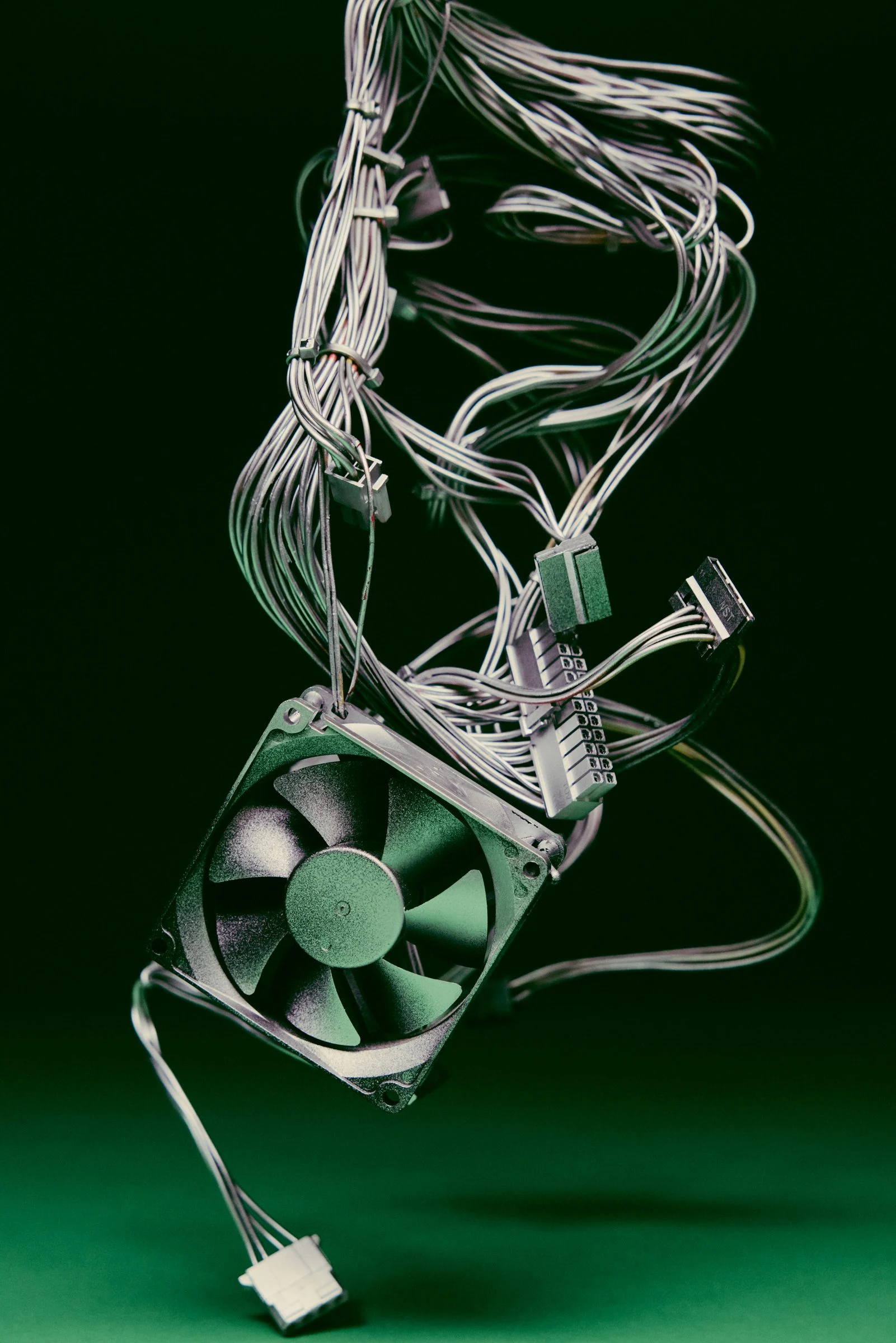
Tangle of cables and a cooling fan suspended against a dark green background
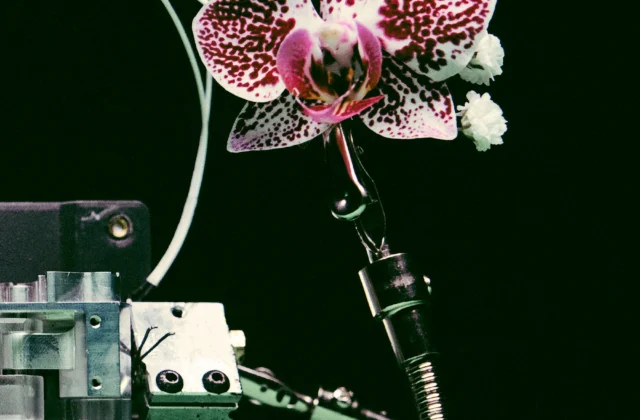
Hand holding a phone up against a white background, lit red Pink orchid held by a mechanical arm against a dark green background
Close-up of orange cables plugged into a network switch
Blurred interior of a dim room with light from the windows

It was collaboration across disciplines and national borders that ultimately made the breakthrough possible

The Lunar Society: illuminating dialogue

Birmingham’s Lunar Society was an eighteenth-century club where the Midlands’ best and brightest industrialists, thinkers and scientists could congregate and collaborate on experimental innovations during the emerging Industrial Revolution.

Meetings were held on a full moon to allow for safe travel for the society’s esteemed patrons at night-time, a prime example of how a space can truly illuminate the creation of ideas.

Some famous members of the Lunar Society include James Watt, inventor of the modern steam engine, Josiah Wedgwood, pioneer potter and entrepreneur, and the polymath Erasmus Darwin, grandfather of Charles Darwin.

Their collaborative experiments drove the early developments of civil planning and the mechanisation of the modern world.

The Lunar Society still exists as a revived institution, offering public education and influencing social and economic policy.

The Royal Institution: a national home for science

Founded in 1799 by Sir Joseph Banks, the Royal Institution brought scientists, experimenters and members of the public into a space dedicated to scientific research, education and the application of knowledge.

As the Royal Institution’s own historical records explain, its establishment marked a more deliberate, structured approach to innovation, bringing scientific experimentation, public lectures and practical demonstrations under one roof.

One of the great paradoxes of modern life is that, while we are more digitally connected than ever before, meaningful human interaction has felt increasingly elusive.

The chemist Michael Faraday spent most of his career at the Royal Institution. Over the course of thirty years, he transformed it from a lecture hall to a world-leading centre of scientific research.

According to the Royal Institution’s account of its scientific discoveries, Faraday’s discovery of electromagnetic induction in 1831 laid the foundations for modern electricity generation, building on years of scientific investigation and experimentation.

The institution’s groundbreaking Christmas lectures nurtured scientific discussion within the public realm and continue today, broadcast on BBC Four during the Christmas period over two hundred years later.

Bletchley Park: cracking the code with collective thinking

And Bletchley Park in Buckinghamshire is another example, as it brought together an unlikely cadre of minds with a specific purpose: to decipher encrypted enemy communications during World War Two.

From mathematicians and linguists to chess players and crossword enthusiasts, Bletchley Park brought in people from disparate backgrounds through unconventional talent-scouting networks to work together on this shared objective.

One example of such scouting was through The Daily Telegraph’s cryptic crossword competition. Those who could solve it in under twelve minutes were invited to a series of interviews and, if successful, asked to join.

The brilliance of Alan Turing, the logician widely regarded as the father of theoretical computer science, was undeniable, but it was collaboration across disciplines and national borders that ultimately made the breakthrough possible.

As the Science Museum’s historical account of the Enigma breakthrough explains, Turing’s achievements were built upon the pioneering work of Polish cryptographers and the collective efforts of thousands at Bletchley Park.

Hands holding a sculpture of metal arms and pink orchids

Innovation thrives when different minds come together.

Collaborative spaces are more important than ever

One of the great paradoxes of modern life is that, while we are more digitally connected than ever before, meaningful human interaction has felt increasingly elusive.

If Britain’s greatest innovations have often emerged from places where different minds could meet, what kinds of rooms should we be building today?

Organisations like ASCUS in Edinburgh and Collusion in Cambridge offer a glimpse of the answer.

By bringing artists, scientists and technologists together, they create opportunities for unexpected encounters and new ways of thinking.

The spaces may have changed since the coffeehouses of the seventeenth century, but the principle remains the same: innovation thrives when different minds come together.